Raise Your Ticket Prices (Without Losing Your Audience or Your Mind)

A Straight-Talking Guide for Theatre Directors, Board Members, and Anyone Staring at the Budget with a Cold Sweat
So here you are: cast is set, the set is halfway built, and the budget spreadsheet is laughing at you in Comic Sans. You’re wondering if it’s time to raise ticket prices—but you can already hear someone on your board muttering, "We can’t charge more. People will stop coming."
Let’s bust that myth wide open.
This isn’t about greed. It’s about survival. It’s about respect for your work. And yes, it’s about making sure your performers have working microphones and your patrons can see the show without leaning halfway into the aisle.
If you haven’t looked at your ticket pricing in a few years—or ever—this guide is for you. It’s packed with data, real stories, and practical, no-fluff strategies for:
- Knowing when it’s time to raise prices
- How much to raise (without causing an uprising)
- How to announce it so people nod instead of revolt
- How pricing affects perception, satisfaction, and long-term sustainability
{{component}}
Let’s dive in.
1. The Data: Your Prices Are Probably Too Low
We looked at over 4,000 organizations on Ludus. Here’s what we found:
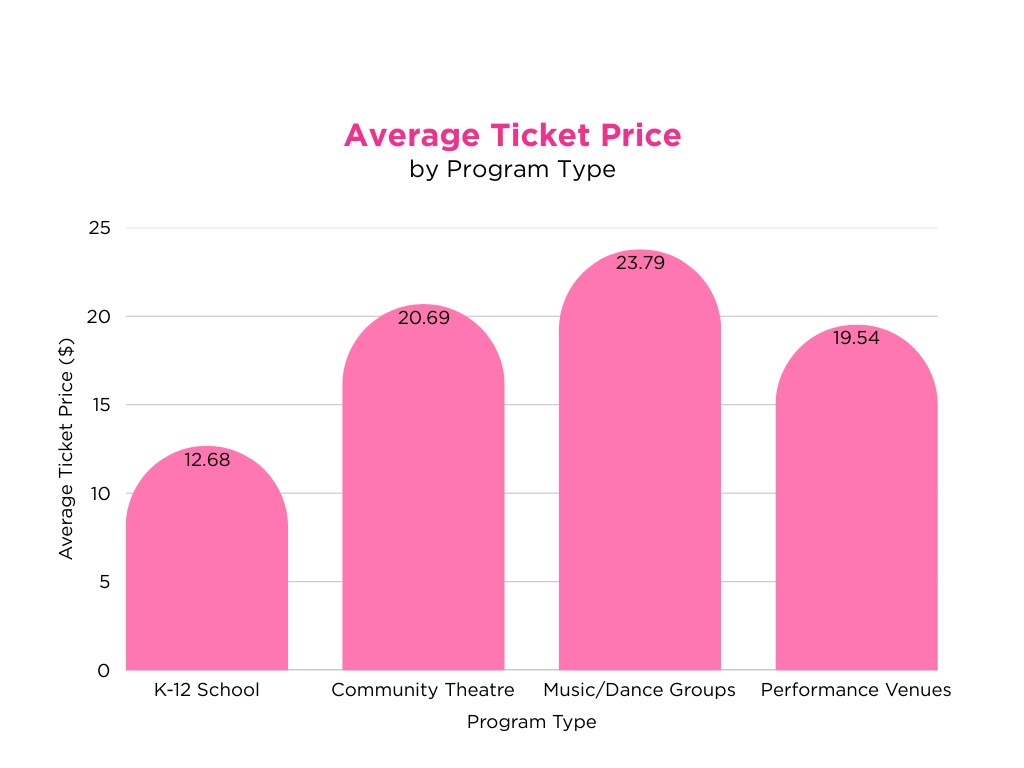
And beyond Ludus:
- Small venue concert prices are up 20–30%
- High school sports are up 20–40%
- Fast food prices are up 15–20%
If you haven’t raised prices, you’re falling behind.
Want more data?

2. When Should You Raise Prices?
Answer: Now. Do it now. You may not get another chance for a while. Make it count. Raise enough to sustain your growth—and use that increase to upgrade the experience.
✅ Your Shows Are Selling Out
High demand = higher value. A modest increase won’t stop loyal patrons.
✅ You’ve Upgraded the Experience
New lights? Flying effects? Costumes that don’t disintegrate under stage lights? Your patrons will pay for quality. We brought in a New York choreographer for ten days—she trained student leaders and improved the show tenfold. Worth every penny.
✅ You Want Early Sales
Add $5 for day-of-show pricing. It encourages early purchases and helps planning.
✅ You’re Offering More
VIP seating. Meet-the-cast receptions. A cozy intermission lounge. Small details = big value.
{{quote}}
3. How to Raise Prices Without a Backlash
This is where boards get nervous—but you don’t have to.
{{quote}}
4. How Much Should You Raise?
Evaluate how much your operational costs have increased and raise prices by a similar amount. A recent study from Theatre Communications Group (TCG) reported that production costs have risen as much as 60% in recent years. If your costs are up 10–15%, a price increase isn’t just fair—it’s necessary.
Larger venues should also consider tiered seating. It’s one of the smartest moves you can make if you want to keep some prices lower while still increasing revenue. It gives your patrons a clear message—if they want a better seat or want to buy earlier, there’s value in paying more. And if they’re watching their budget, there’s still a spot for them too. It’s flexible, fair, and widely used for a reason.
- Go bold—but smart. You may only get one price increase every 5–7 years. Don’t waste it.
- Match inflation. Costs are up. Your prices should be too.
- Think perception. If your ticket is priced like a fast food combo, it’s easier to skip. Price it like the experience you’re offering.
- No apologies. Be proud. You’re improving the art.
{{component}}
Explore our companion resource:
.png)
5. What If It Fails?
Let’s say you raise prices by $3 and lose 5% of your attendance. If you usually have 180 patrons, 5% is nine people. You’re still ahead financially—and most often, that dip is temporary. Patrons adjust to new norms quickly, especially when they see results.
{{quote}}
This is your Ticket Value Cycle:
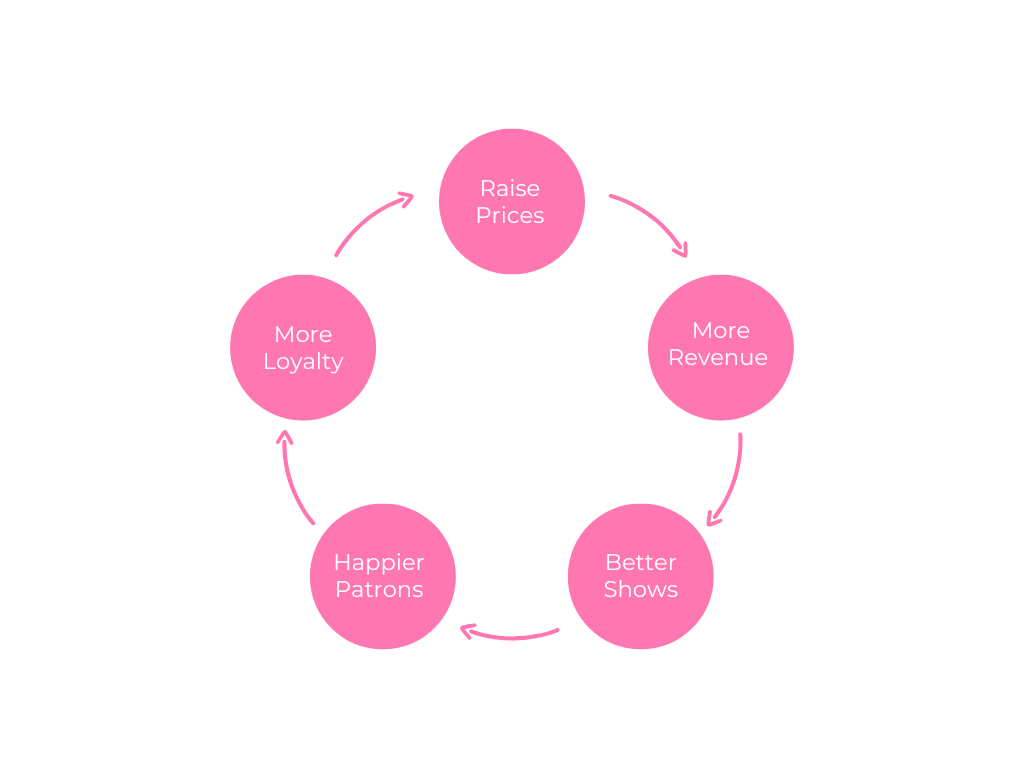
Repeat. Build. Thrive.
6. How to Announce a Price Increase (Without Panic)
What NOT to do:
- Don’t bury the news on page 3 of the program.
- Don’t raise mid-run.
- Don’t lead with guilt.
- Don’t wait until it’s too late.
What TO do:
- Tie it to something big. A new season, a new show, a new milestone.
- Highlight what’s new. “We’re flying Mary this year.”
- Use every channel. Email. Social. Posters. Program inserts.
{{component}}
7. Final Words for the Skeptical Director
Let me say this like I would backstage, flashlight in hand and headset duct-taped:
You’re not being greedy. You’re being brave. And responsible.
We have to stop saying, “Our audience won’t pay more.” It’s not true. What they won’t pay for is mediocrity.
They want magic. They want quality. And they’ll pay for it—if you deliver.
I’ve returned cans for green felt. I’ve used $10 microphones that cut out in the middle of ballads. But when we raised prices and raised the bar, people noticed. And they came back for more.
{{quote}}
Download our Ticket Price Strategy Checklist

New resources,
straight to your inbox
We'll send you the latest guides, spotlights, and webinars — no noise, just the good stuff for arts organizations like yours. No spam, unsubscribe anytime.























.png)